Wednesday, June 23, 2010

Become part of their ritual.


Did you know that putting a lime slice in your corona bottle only dates back to 1981?

I didn't. I always thought it was something to do with killing the bacteria that might be around the bottle when in storage.

Nope. According to famous brand guy, Martin Lindstrom, the ritual started as a bet by a barman and his mate to see if others in the bar would do the same. Clearly they did. Lindstrom makes the point that the lime slice ritual had contributed significantly to Corona's success.

We use rituals as a shortcut. We perform lots of rituals every day. Often without thinking. Lindstrom places them into different categories. For example, 'preparing for battle' is all the stuff we do each day from brushing our teeth, showering, checking our email or buying a coffee in the morning from the coffee angel when we get off the bus.

In his book Buyology, Lindstrom points to other brands that inject rituals into the way we buy or use stuff. Guinness turned a potential weakness (waiting for slower pint) into a ritual that is expected and appreciated by proper Guinness drinkers - good things come to those who wait.

Become part of their daily ritual and your brand is in a good place.

Wednesday, June 16, 2010

The 1% windfall

Been working on a project recently that requires a bit of proper thinking around pricing. I've written about pricing before. Although not often. It doesn't get the same air time as other areas within marketing. But it is so important. Look at this simple, yet powerful example:

A 1% increase in price could deliver a 20% increase in profits.

How? Let's say you sell something for a price tag of €100. And after operating costs, you walk away with €5 profit per unit. Now, if you increase your price by just 1%, your new price is €101. Your profit has now jumped from €5 to €6 - a 20% increase.

Of course, we need to assume that customers will continue to buy in the same amounts as before. This assumption clearly needs testing. But it is reasonable enough. Think of any product or service that you value and are willing to pay €100 for. Would you still value and buy it if it cost €101? I'm guessing you would. I would.

The point is that price decisions affect the bottom line immediately. The example above is from a good book called The 1% windfall.

Friday, June 11, 2010

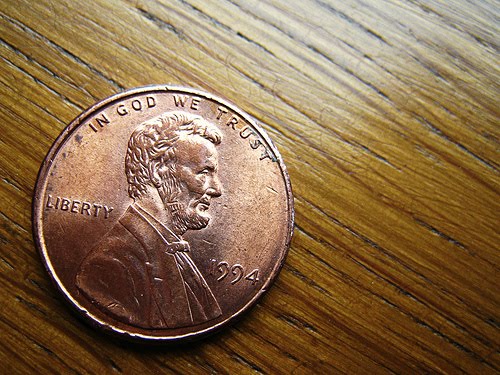
Asking for just a penny can increase donations.


Image courtesy of sally monster

Last month, Conor wrote an interesting article about charity donations raised through text message. One of the assumptions that Conor questioned was this: If you ask people to donate through text, they will give less. You might get more people to give (higher response), but overall you will collect less cash for your efforts.

I don't know the answer. I understand the logic but think Conor is right to at least question this.

There is an interesting experiment from the American Cancer Society with surprising results. While not related to text messaging, it is related to asking for less. It may not hold up over text donations, but worth at least challenging the assumptions.

As part of a fundraising campaign, Robert Cialdini and the American Cancer Society went door-to-door asking for donations.

One half of the those they spoke with were asked the following question "Would you be willing to help by giving a donation?". For the other half, they added the following line "Even a penny will help".

The results? Almost twice as many people gave when told that even a penny would help. While not surprising, this might lead to one type of strategy over another. So instead of aiming to raise as much money as possible in one go, you might aim to get as many people as possible to show an initial interest, collect their details and then work on this group over time to turn them into advocates.

Here's the surprising bit from the experiment.

Despite being told that 'even a penny would help' the donation sizes were no smaller than the first group. So overall, by telling people that 'even a penny would help' increased the number of donations and the total amount collected. Nice eh.

Lots of behavioural economics examples like this in Robert Cialdini's books.